
Last updated: 10 November 2026 · 7 min read
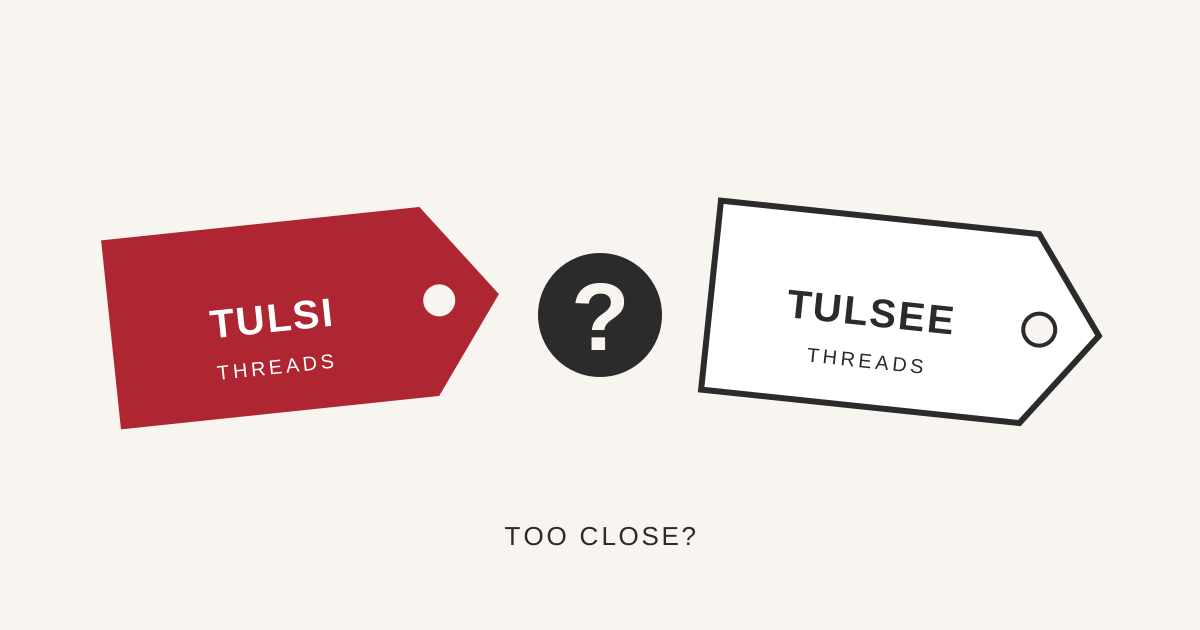
The message usually starts the same way. "There's another brand on Instagram with almost our name. What do we do?"
Sometimes the founder is two weeks from launch and has just found it. Sometimes they've been trading for five years and a courier has delivered a legal notice from someone they've never heard of. The two situations feel very different. But the questions you have to answer are mostly the same, and so is the first piece of advice.
Slow down, but don't look away
Panic leads to bad decisions. People rebrand overnight, fire off angry emails or post about the "copycat" online, and each of those can cost them later.
Ignoring it is just as bad, and probably more common. A pending application you don't oppose can become a registration. A notice you don't answer can turn into a court case you hear about late. So take a day or two to gather facts. Not a month.
How close is it really
Similar isn't the same as conflicting. Two things decide most of it: how alike the names are, and how alike the businesses are.
On the names, look at the overall impression rather than counting letters. How do they sound when said aloud? In India that matters a lot, because people say brand names in several languages and spell them however they like. Do they share the distinctive part, the bit customers actually remember? Do they mean the same thing? Our post on picking a brand name that can clear a search goes into how similarity is judged.
On the business side, ask whether the goods or services are the same or related, and whether the same customers would come across both. Take a hypothetical. You sell handloom kurtas as "Tulsi Threads" and find "Tulsee Threads" selling sarees online. Same sound, same customers, closely related goods. That's a real problem. If "Tulsee Threads" turned out to be a tailoring software company, it would be a much weaker one. Not necessarily nothing, because classes are only an administrative grouping and related goods can sit in different ones (our guide to trademark classes explains how they work).
Then find out where the other mark stands on the register. Is it registered, pending, under objection, opposed, abandoned, or a registration that was never renewed? Each status changes your options. You can check this yourself on the official IP India website, though the search screens take some getting used to. Our automated search tool is temporarily unavailable, so if you'd rather not do it yourself, ask our team to check for you.
And look beyond the register. A business can have rights in a name it never filed, as we explain in our post on unregistered trademarks.
Who was there first
Timing matters more than most people expect. Under the Trade Marks Act, 1999, a business that has used its mark continuously from an earlier date can have rights that hold up even against a later registration. Infringement claims need a registered mark. An unregistered business relies on passing off instead, which protects the goodwill it has built and is harder to prove.
Either way, the argument is won or lost on evidence. "We've been using it since 2019" is a claim. A 2019 invoice with the name printed on it is proof. Start collecting now, while it's calm:
- dated invoices and bills that show the name
- old packaging, labels, menus or product photos, ideally with something that dates them
- marketplace listings, website archives and your earliest social media posts
- anything showing where you sold and to whom, such as GST records, distributor agreements or press mentions
Keep originals. Don't edit or tidy old posts, and don't backdate anything. A single doctored document can sink an otherwise strong position.
Your realistic options
If you haven't launched or filed yet, the cheapest fix is often to change the name, or adjust it enough that the conflict goes away. That hurts when you're attached to it. It hurts a lot less than rebranding after two years of marketing. Sometimes a smaller change works, like adding a distinctive word or dropping the part that overlaps. Get a view on whether the adjusted name actually clears the problem before you print anything.
You can sometimes narrow what you file for. If the other mark is for software and you only need protection for clothing, a tightly drafted application may avoid the overlap. It won't fix a name that's simply too close for the same goods.
You can approach the other party. A consent letter, or a coexistence arrangement setting out who uses the name for what and where, does get agreed between businesses that don't really compete. Whether the Registry accepts it is a separate question, so draft it with that in mind.
If their application is still pending and your mark is earlier and similar, you may be able to oppose it. Opposition is filed after the application is published in the Trade Marks Journal, within three months of publication, extendable by one more month. Miss that window and you're looking at slower, more expensive routes. Our guide to objection vs opposition explains the process.
If they already hold a registration, there are procedures for asking for a mark to be removed from the register, for example where it should never have been granted, or possibly where it hasn't been used. These are technical, depend heavily on the facts, and aren't something to attempt from a blog post. Take advice.
If a legal notice arrives
Read it twice, slowly. Note the date on the letter, the date you received it and any deadline it sets. Find out exactly which mark they rely on and whether it's registered or only applied for. Keep the envelope or email, too.
Then don't reply that day. An angry reply, or a hurried "sorry, we'll stop", can both be quoted back at you. A deadline in a notice is usually the sender's own deadline, not one set by a court. Still treat it seriously, and if you need time, a short holding reply is often better than silence.
Don't change your name, take down your listings or delete posts before you've had advice. Even if you end up rebranding, how and when you do it can matter. Get someone who handles these disputes to read the notice and your evidence before anything goes back.
Mistakes that make it worse
Assuming a different class means you're safe. Assuming that because you're bigger, or older, you'll automatically win. Filing your own application in a hurry with no search, just to "get in first", which can pull you into an objection or opposition you didn't need. Relying on a domain name or GST registration as if it were a trademark. And the quiet one: finding a pending lookalike application, meaning to deal with it, and letting the opposition window run out.
Founders also tend to argue about who's in the right morally. That's understandable. It just isn't how these disputes get decided. Dates, evidence and how close the goods are do most of the work.
When to get professional help
Some of this you can do yourself: the first look at the register, gathering evidence, thinking about whether a name change is bearable. Get help as soon as there's a legal notice, a pending application you might want to oppose, a registration you think shouldn't be there, or a plan to spend serious money on a name that has a lookalike. Those are the points where a wrong step is expensive to undo.
We can review where the other mark stands, look at your evidence and tell you honestly what your options look like. We can't promise an outcome, and anyone who does is guessing. If an opposition makes sense, our trademark opposition service handles the filing. If your own application has drawn an objection because of an earlier mark, our post on what to do when your trademark is objected is the place to start.
If you're dealing with this right now, write down the other name, where you found it, and the date you first used yours, then send those to our team along with a copy of any notice you've received.
Frequently asked questions
-
Someone registered a name similar to mine after I started using it. What can I do?
Earlier use can matter a lot. Depending on the facts, you may be able to keep using your name, oppose their application if it is still pending, or ask for their registration to be removed. All of these depend on evidence of when you started, so collect it now and take advice before you act.
-
Is a mark in a different class always safe to ignore?
No. Classes are an administrative grouping. Related goods or services in another class can still conflict, and a mark with a strong reputation can get wider protection. A different class is a good sign, not a guarantee.
-
I got a legal notice with a seven-day deadline. Do I have to reply in seven days?
The deadline in a notice is usually set by the sender, not by a court or the Registry. Don't ignore it, but don't rush a reply either. Get advice quickly, and if you need more time, a short holding reply is often sensible.
-
Can the other business and I simply agree to share the name?
Sometimes. Businesses do sign coexistence agreements that set out who uses the name for what, and where. Whether the Registry accepts both marks is a separate question, so have any agreement drafted with your trademark position in mind.
